Platelet rich plasma is a preparation of highly concentrated platelets above what is normally contained in our blood. Platelets are cells that are found in your blood that contains thousands of growth factors and proteins that stimulate tissue healing and wound repair. Plasma is the liquid portion of blood that consists of water and other important substances that support healing ; it provides a fluid medium for cells to circulate.
How does PRP work?
The growth factors, proteins and molecules released by the platelets have been shown to stimulate repair cells to go to areas of injury, promote tissue building and stimulate blood vessel formation. They have also been shown to decrease inflammation and cartilage degradation.
How is PRP made?
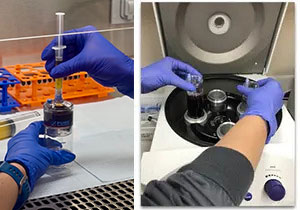
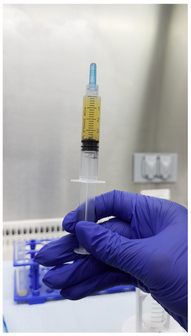
Platelet rich plasma is produced by first collecting a sample of your blood (about 60 mL or four tablespoons). The next step involves a centrifugation process where the patient's whole blood is separated to it's different cellular components and the platelets are concentrated above baseline levels, typically 3-6 times more or higher. The whole process takes about 20-30 mins and is performed in our laboratory where a strict sterile process is observed to keep the samples safe and clean. The final PRP product is then collected in a syringe ready for injection.
Are all PRP treatments the same?
Not all PRP treatments are the same. The way PRP is prepared and processed can make a big difference, and certain orthopedic conditions may need specific types of PRP. That’s why it’s important for your doctor to stay up to date with the latest research in regenerative medicine.
Technique matters. For PRP to work, it needs to be placed exactly where the injury is - for example, into the torn part of a tendon or inside a joint with arthritis. In the past, many doctors did injections by feel alone, without being able to see where the needle was going. The best way to make sure PRP is delivered precisely is by using imaging guidance, such as ultrasound or fluoroscopy. This not only makes the injection more accurate but also more comfortable, since the doctor can avoid sensitive tissues.
Dr. Ambach is certified in both Musculoskeletal Ultrasound and Fluoroscopic Imaging, and has trained hundreds of physicians worldwide in these techniques. She is recognized as a national leader in image-guided injections.
Platelet dose matters. The amount of platelets in PRP can vary depending on the device used to make it. There are more than 50 FDA-cleared devices available in the U.S., but not all of them produce PRP with a high enough platelet concentration to help healing. A sufficient platelet dose is needed to activate stem cells, support collagen formation, and promote tissue repair. Without enough platelets, these healing effects won’t happen.
At Bioevolve, we use a cell counter or a hematology analyzer to examine the platelets being produced and measure the platelet concentration in every PRP sample we prepare. This ensures the PRP used in your treatment has the right dose for optimal healing.
Is PRP safe and Effective?
There are many scientific studies published in the peer-reviewed medical literature that confirm the safety of PRP when used for orthopedic conditions. Currently there are more than 60 randomized controlled trials (RCT), the gold standard for effectiveness research, proving that PRP works as good or better than standard orthopedic care for 12 different orthopedic conditions. A significant number of high-quality studies demonstrate clear safety and efficacy for knee osteoarthritis and show that PRP can decrease pain and improve function in patients with tennis elbow and other tendon injuries. There are also high-quality studies supporting its use for osteoarthritis in other joints, tendons and lumbar disc degeneration
What Orthopedic Conditions can be treated with PRP?
- Osteoarthritis
- Tendon degeneration or tendon tear
- Ligament sprain or tear
- Soft tissue injuries from sports
- Degenerative disc disease in the spine
- Nerve injuries
What are the Possible side effects of a PRP injection?
Side effects are the same side effects associated with other injections like pain from the injection site, bleeding, infection, and nerve injury. The safety of PRP have been proven in many studies and is associated with minimal to no risks since it uses the patient's own blood.
What to Expect During a PRP treatment?
For your PRP treatment, our phlebotomist will take a small sample of your blood. This is then processed in our lab to isolate and concentrate the platelets, which usually takes about 20 - 30 minutes. While your PRP is being prepared, your doctor will review the procedure with you and answer any questions.
Next, we’ll perform an ultrasound or live X-ray exam to carefully look at the injured area. The skin will be cleaned with antiseptic solution and numbed with a local anesthetic to keep you comfortable. Using ultrasound or X-ray guidance, the PRP will then be injected directly into the precise area that needs healing.
After your treatment, you may use ice for the first 2 - 3 days if you feel sore. Before you leave, we’ll give you detailed instructions for your recovery and post-procedure care.
What to Expect After PRP therapy?
Most people are able to return to normal daily activities within 2 - 3 days after PRP treatment, and many go back to work the next day. We’ll ask you to avoid heavy exercise for about a week to allow the area to heal. If you feel sore after the injection, you can use ice, Tylenol, or prescribed pain medication for relief.
About 1 - 2 weeks after your treatment, your doctor will design a personalized physical therapy program to help you recover and rebuild strength safely. Most patients are able to return to sports or more demanding physical activities within 6 - 8 weeks, though more severe injuries may take longer - sometimes over 3 months. Even in those cases, your rehabilitation will begin gradually within the first couple of weeks so your body stays conditioned during the healing process.