Chronic pain and orthopedic injuries can make everyday movement difficult and affect overall quality of life. Regenerative treatments such as platelet-rich plasma (PRP), bone marrow aspirate concentrate (BMAC), and micro-fragmented adipose tissue (MFAT) are increasingly used to support the body’s natural healing process and provide non-surgical treatment options. Because these therapies are designed to target specific areas of damaged or inflamed tissue, accurate placement is an important part of treatment.
Image-guided injections using ultrasound or fluoroscopy allow physicians to deliver treatments with greater precision than injections performed using anatomical landmarks alone.
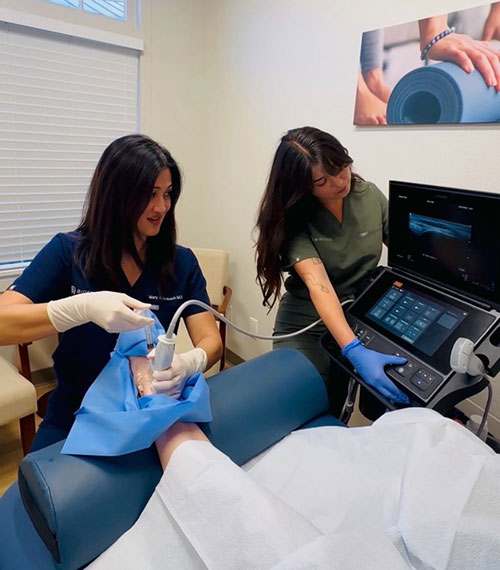
Musculoskeletal Ultrasound
Ultrasound provides real-time images of muscles, tendons, ligaments, joints, nerves, and other soft tissues, allowing providers to visualize the needle and surrounding structures during the procedure. This can be particularly useful when treating tendon injuries, soft tissue conditions, and areas where avoiding nearby nerves or blood vessels is important. Ultrasound is valuable when guiding injections without radiation.
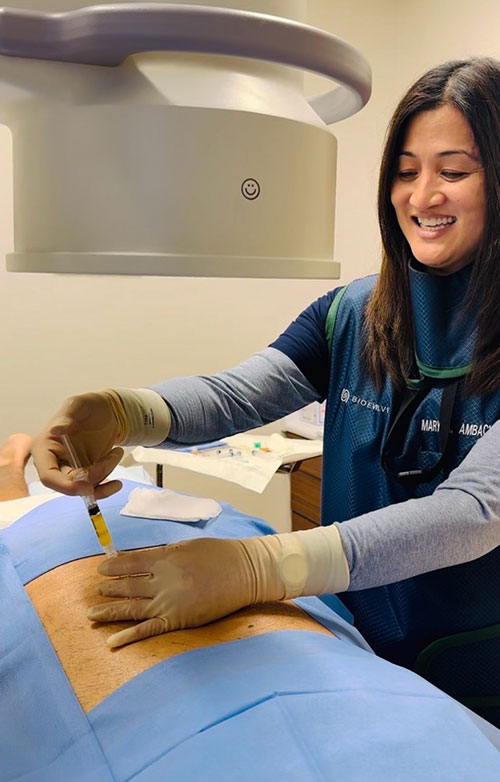
Fluoroscopy
Fluoroscopy offers another approach to precision care by using continuous, real-time X-ray imaging to guide injections into joints and deeper structures. It can be especially helpful when treating areas such as the spine, sacroiliac joint, or facet joints, where accurate needle placement can be more challenging. During a fluoroscopy-guided procedure, the physician uses a specialized X-ray system to view the anatomy on a monitor and guide the needle into the intended location. In some cases, contrast material is used to confirm positioning before the treatment is delivered.
Both techniques are designed to improve accuracy and help ensure that medications or regenerative materials reach the intended treatment area. The choice of imaging method depends on the specific condition, anatomy, and type of injection being performed. Most image-guided injections are performed in an outpatient setting.
Although no procedure can guarantee a particular outcome, image guidance can help physicians perform targeted injections with greater accuracy and consistency. For patients considering regenerative medicine or other non-surgical treatments for joint and musculoskeletal pain, discussing whether ultrasound or fluoroscopy guidance is appropriate can be an important part of understanding their treatment options.