Understanding Platelet Lysate
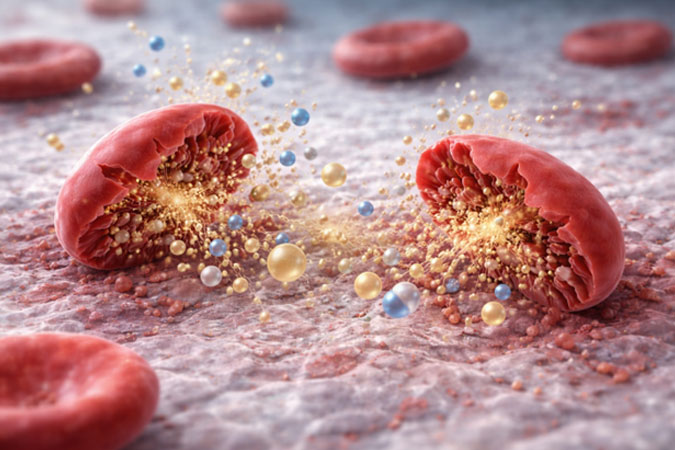
Platelet Lysate is an advanced orthobiologic therapy created from a patient’s own blood and designed to harness the body’s natural repair signals. The treatment is produced by isolating platelets and activating them to release their internal contents-most notably a concentrated array of regenerative growth factors. Once prepared, the lysate is injected into injured or inflamed tissues to support healing, decrease pain, modulate inflammation, and enhance tissue recovery.
How Platelet Lysate Is Prepared
Preparation begins with a routine blood draw. The sample is processed using centrifugation to separate platelet-rich plasma (PRP), which contains a high density of platelets responsible for coordinating healing responses.
Rather than injecting PRP directly, the platelets undergo a controlled lysis process that breaks their membranes and releases growth factors in their fully bioavailable form. At Bioevolve, this is accomplished using a carefully validated freeze–thaw protocol that achieves the greatest amount of platelet disruption. The final product is a clean, cell-free solution rich in biologically active signaling proteins.
Platelet Lysate vs PRP: What’s the Difference?
Both therapies originate from the patient’s blood and have the same functions in healing and tissue repair. They differ in how they provide the growth factors :
- PRP relies on intact platelets that slowly activate after injection, releasing growth factors over time as the platelets degranulate. They release healing factors slowly over time.
- Platelet Lysate delivers those growth factors immediately, since they have already been released during processing, resulting in a more rapid biologic effect.
This distinction makes Platelet Lysate particularly useful in situations where prompt anti-inflammatory or neurotrophic signaling is desired.
Clinical benefits of Platelet Lysate :
- Immediate availability of growth factors at the treatment site
- Faster modulation of inflammation
- Lower likelihood of post-procedure soreness or reactive flares
- Elimination of platelet aggregation or clot-related effects
Conditions Commonly Addressed with Platelet Lysate
Platelet Lysate is frequently used for musculoskeletal and nerve-related disorders, such as:
- Sciatica and spinal nerve irritation
- Peripheral nerve injuries
- Carpal tunnel syndrome
- Adhesive capsulitis (frozen shoulder)
- Degenerative joint conditions
- Tendon injuries, tendinopathies, and partial tears
- Bursitis associated with tendon injuries
- Disc herniations and disc-related pain
Why Platelet Lysate Is Not Widely Available
The safe and effective preparation of Platelet Lysate requires specialized equipment, strict sterile processing, and technical expertise that exceed the capabilities of most outpatient clinics. Without appropriate infrastructure, consistency and quality cannot be assured.
Bioevolve is able to offer this therapy because of its dedicated on-site regenerative medicine processing center and experienced clinical team committed to advanced biologic care.